The site InflammationFactor.com is no longer active.
This page offers general Information about diet, inflammation, and health.
Legacy information about the IF Ratings can be found below.
Inflammation & Health
Over the last several decades, an increasing amount of medical research has focused on the role of inflammation in aging and disease.
Certain conditions, such as asthma, allergies, arthritis, and auto-immune disorders, have an obvious inflammatory component. However, chronic, low-level inflammation (sometimes referred to as “systemic” or “silent” inflammation) has now been linked with diseases ranging from heart disease, diabetes, and cancer to depression, Alzheimer’s, and osteoporosis. Inflammation also appears to be a key factor in skin aging and other outward signs of aging.
Exactly how inflammation relates to many of these conditions–whether it is a cause, effect, or innocent bystander–is still unclear. However, we know that elevated inflammation markers are a risk factor for many of the most common diseases of aging. And research suggests that dietary manipulation and other lifestyle changes can reduce inflammation and other risk factors for disease.
Inflammation is not a disease
Because so many health problems have been associated with it, it’s tempting to think of inflammation as a disease. But of course inflammation is not always a bad thing. It’s a vital part of a healthy immune response. Your body depends on inflammatory responses to defend you from bacterial and viral invaders and even cancer cells. Inflammation also helps the body heal from injuries.
The problem is one of balance. As a result of diet and lifestyle, our bodies tend to over-produce inflammatory chemicals. At the same time, we don’t get enough of the nutrients that naturally reduce inflammation. If you are carrying around a few extra pounds, your risk of inflammation-related illness is magnified. Fat cells produce inflammatory chemicals at a rate far greater than other cells. When you gain weight (or fail to lose it), you are putting your body under an additional inflammatory burden that increases your risk of disease and accelerates the aging process. The threat is double-edged, because excessive inflammation also makes it difficult for you to lose weight!
Healthy lifestyle habits such as exercising regularly, not smoking, maintaining a healthy weight, and minimizing stress all help to reduce inflammation. But one of the biggest factors in chronic, low-level inflammation may be the food you eat every day.
Diet & Inflammation
Healthy lifestyle habits such as exercising regularly, not smoking, maintaining a healthy weight, and minimizing stress all help to reduce inflammation. But one of the biggest factors in chronic, low-level inflammation may be the food you eat every day.
You might assume that all “healthy foods” are anti-inflammatory and all “unhealthy foods” are inflammatory. If this were the case, the anti-inflammatory diet would resemble any other healthy eating plan.
But it’s not quite that simple. Some wholesome foods, such as certain fresh fruits, grains, and lean protein sources, can have mildly inflammatory effects in the body. That’s not to say that you should eliminate these foods from your diet. But to avoid excessive inflammation, you want to balance your intake of inflammatory and anti-inflammatory nutrients and foods. To do that, you need to know which are which.
What makes foods inflammatory?
There are at least two dozen factors that affect a food’s inflammatory potential, including the amounts and proportion of various fatty acids, the amount of antioxidants and other nutrients, and the food’s glycemic impact, or effect on blood sugar levels.
Many foods have a combination of inflammation-producing and inflammation-reducing factors. An orange, for example, contains antioxidants that quell inflammation. But it also contains natural sugars that can have a mild inflammatory effect. Likewise, a piece of lean beef contains both inflammatory saturated fats as well as a surprising amount of anti-inflammatory monounsaturated fats. Popular advice about “anti-inflammatory” foods is often based on just one or two nutrients, such as omega-3 fats or antioxidants and fails to consider the whole picture.
IF Rating System
The IF RatingTM System was proposed by Monica Reinagel in 2005 as a method of predicting the inflammatory or anti-inflammatory effects of foods and combinations of foods, based on the nutritional composition of the foods.
The IF Rating Formula
The proprietary algorithm used to calculate the IF Rating® included more than 20 different factors that affect a food’s inflammatory or anti-inflammatory potential, including:
- amount and type of fat
- essential fatty acids
- vitamins, minerals and antioxidants
- glycemic index
- anti-inflammatory compounds
IF Ratings of foods
The IF Ratings were originally intended as a tool that individuals could use to monitor and manage their dietary choices.
Other research groups have since developed similar systems, including the Dietary Inflammation Index and the Empirical Dietary Inflammatory Index.
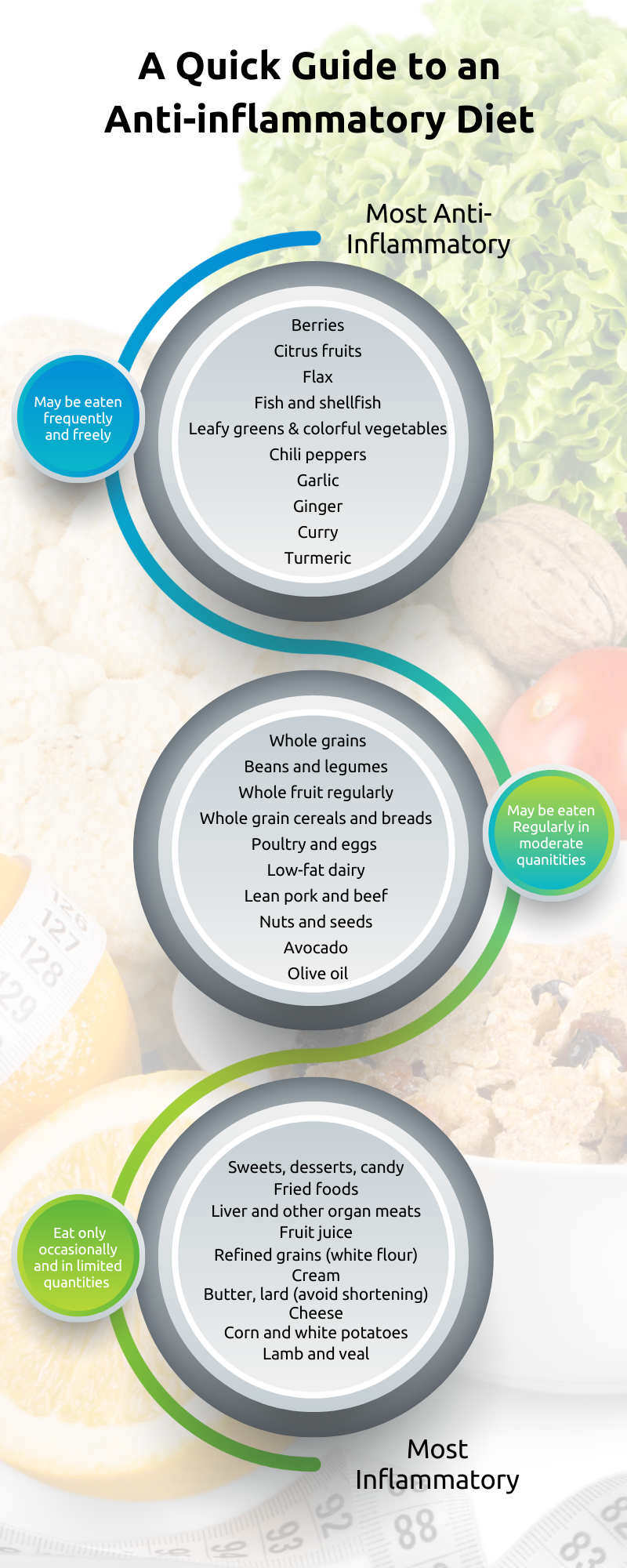
The IF Ratings of individual foods are no longer being updated or distributed. However, the most important principles to emerge from this work can be rather simply summarized, as shown in the infographic below. (Click here for a downloadable version)